
What Designers Should Look for in a Custom Textile Manufacturing Partner
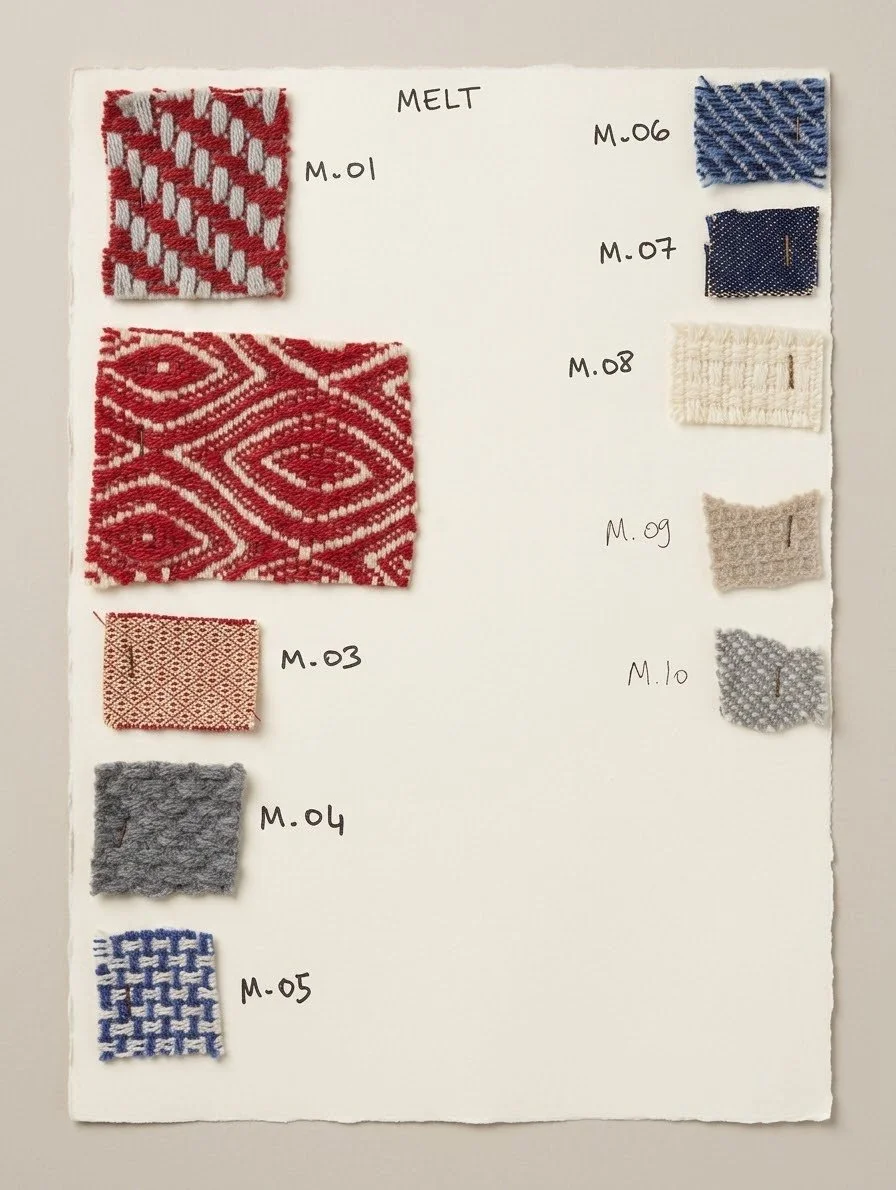
A beautiful textile is important.
But when a designer is choosing a manufacturing partner, there is usually another question in the back of their mind:
"Can I rely on them when the project gets complicated?"
It's a reasonable question.
Custom textile projects rarely follow a perfectly straight line. There may be a particular weave to develop, a color that needs to be matched, a size that falls outside standard dimensions, or a sample that needs to be adjusted before it is approved.
The finished product matters, of course.
But so does everything that happens before it.
Custom Manufacturing Involves a Lot of Details
A custom throw or blanket may look relatively simple once it is finished.
Getting there can involve dozens of decisions.
The fiber and ply need to be appropriate for the intended use. The weave needs to be selected. Dimensions need to be confirmed. Colors may need to be developed or matched. Edge finishing needs to be specified.
Then there is sampling, approval, production, inspection, packaging, and shipping.
When a project involves multiple people on the design, procurement, and manufacturing sides, clear communication becomes just as important as technical ability.
The Sample Needs to Reflect the Conversation
One of the most important moments in a custom project is the sample.
A sample isn't simply something to look at.
It becomes the physical reference for what everyone has agreed to produce.
If the approved color is different from what was originally discussed, or the weave doesn't have the expected character, it is far better to identify that during sampling than after production has begun.
That's why we place so much importance on getting the development stage right.
The goal isn't simply to produce a sample quickly.
It's to produce a sample that gives everyone confidence about what comes next.
Realistic Timelines Matter
Another important part of a manufacturing relationship is setting realistic expectations.
Custom production takes time.
Sampling takes time. Color development can take time. Handwoven production takes time.
Rather than promising an aggressive timeline simply to win a project, we believe it is better to establish a realistic schedule from the beginning.
That allows designers and project teams to plan their own work around it.
And if something changes during production, communicating that early is just as important.
Communication When Things Change
No manufacturing process is completely free of unexpected issues.
A material may require additional testing. A sample may need another adjustment. A production schedule may change.
What matters is how those situations are handled.
If something affects the agreed plan, the manufacturer should communicate it rather than allowing the client to discover the problem later.
In our experience, early communication almost always makes a difficult situation easier to manage.
Silence rarely does.
Craftsmanship Is Only One Part of the Relationship
We've worked on enough custom projects at Arihant Collection to appreciate that craftsmanship is only one part of being a good manufacturing partner.
A manufacturer can produce an exceptional textile and still create a frustrating experience if communication is poor, timelines are unclear, or details are overlooked.
The opposite is also true.
A strong manufacturing relationship makes the entire process feel more manageable.
Questions get answered.
Details get confirmed.
Problems are addressed early.
Approvals are documented.
Everyone understands what is happening next.
These things may not appear on the finished product, but they have a significant impact on the project.
Reliability Is Built Over Time
Trust in manufacturing isn't usually created by one successful order.
It develops through repeated experiences.
You send a specification and receive the right sample.
You approve a product and receive what was approved.
A timeline is agreed upon and communicated clearly.
Something changes, and you hear about it before it becomes a problem.
Over time, those experiences create confidence.
The relationship becomes less about hoping everything will go smoothly and more about knowing that the other side will communicate and respond when something doesn't.
The Simple Principle Behind It
For us, good manufacturing relationships are built on a fairly simple principle:
Do what you said you would do, and communicate when you can't.
It sounds obvious.
But in custom manufacturing, where every project can have its own specifications and challenges, that principle matters.
Beautiful products will always be important.
But for designers, architects, retailers, and hospitality teams working against real project deadlines, the experience of getting that product made matters too.
At Arihant Collection, we believe craftsmanship and reliability should go together.
Because the best manufacturing partnership isn't simply one that produces a beautiful textile.
It's one that gives the designer confidence throughout the process.
