
The Role of Textiles in Bedroom Design
When designing a bedroom, the bed and larger furniture pieces usually get most of the attention.
The bed establishes the proportions of the room. The headboard can become a focal point. Nightstands, lighting, flooring, and built-in elements all contribute to the overall design.
But from what I've seen working with designers, it's often the textiles that make a bedroom feel finished.
They may not be the first things selected, but they can have a surprisingly large influence on how the room ultimately feels.
The Impact of Small Details
A bed runner, coverlet, throw, or collection of cushions can change the character of a bedroom without requiring any major changes to the design.
The color palette can remain exactly the same.
The furniture can stay exactly where it is.
Yet introducing a different textile can add warmth, texture, contrast, or simply a greater sense of completeness.
This is particularly noticeable in bedrooms because the bed occupies such a significant visual area.
Even relatively small changes in its layering can affect the entire room.
Color Isn't the Only Variable
When people think about choosing textiles, color is often the first consideration.
And it makes sense.
A textile needs to work with the existing palette and complement the materials around it.
But color is only one part of the equation.
Weight, texture, weave, and drape can all change the way a textile interacts with the space.
Two bedrooms can use almost identical colors and still feel completely different depending on the textiles selected.
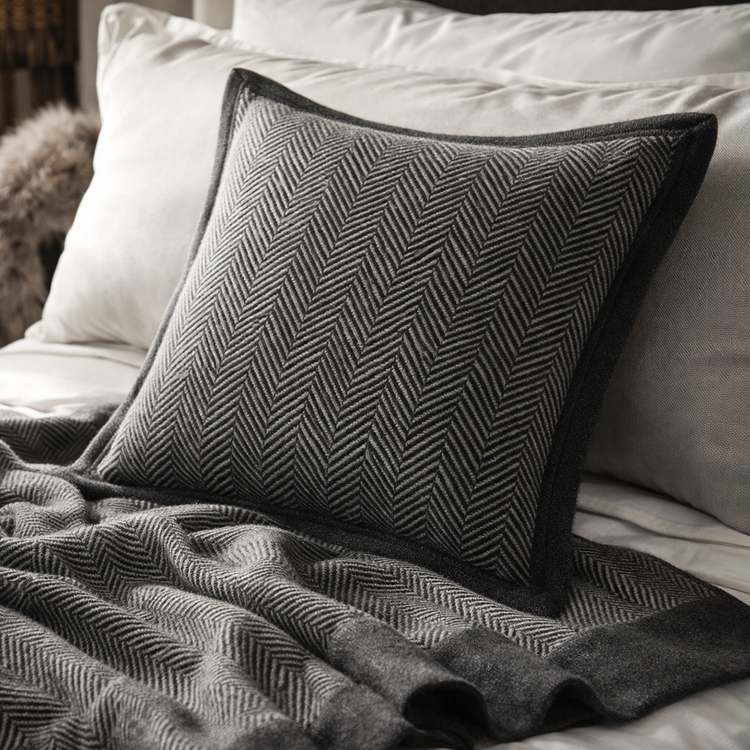
A smooth, lightweight throw creates a very different impression from a substantial 8-ply coverlet.
A subtle weave can add depth without introducing another color.
A heavily textured construction can become a visual focal point even within a neutral palette.
Texture Adds Another Layer
Texture is particularly important in bedrooms because the space is designed around comfort.
Soft upholstery, natural wood, woven materials, bedding, rugs, and decorative textiles all contribute to the tactile character of the room.
Cashmere can add another layer to that experience.
A lightweight throw may create a relaxed, effortless feel when casually placed across the bed or a chair.
A heavier blanket or coverlet can introduce more structure and visual weight.
The choice depends on the atmosphere the designer is trying to create.
Creating Contrast Without Adding Color
One of the things we find particularly interesting about textiles is their ability to create contrast without changing the color palette.
Imagine a bedroom built around warm neutrals.
Adding another color might make the room feel busier than intended.
Instead, a different weave or texture can create visual distinction while keeping the palette restrained.
A tonal geometric weave, for example, can introduce pattern without introducing a new color.
A heavier construction can create depth through shadow and texture.
A subtle change in surface can be enough to make the bed feel more layered and considered.
The Final Layer of a Room
Textiles are often selected relatively late in the design process.
By that point, many of the major decisions have already been made.
The architecture is established.
The furniture has been selected.
The finishes and lighting have been considered.
What remains are often the elements that bring everything together.
This is where textiles can be particularly effective.
They can connect different materials within the room, soften harder surfaces, introduce warmth, and create a sense of visual continuity.
In many ways, they act as a finishing layer.
Small Decisions, Big Difference
The most interesting thing about textiles is that their impact isn't always obvious when looking at them individually.
A throw may seem like a small addition.
A bed runner may occupy only a fraction of the room.
A cushion may be one of many elements on the bed.
But together, these details influence how the entire space is perceived.
The longer I've worked with textiles, the more I've come to appreciate this.
Good interior design isn't always about adding more.
Sometimes it's about making a few carefully considered choices and allowing the materials to do the work.
And in a bedroom, those choices are often found in the layers of textile that make the space feel complete.
