
Why Cashmere Yarn Quality Matters: What Determines the Feel and Performance of a Finished Textile
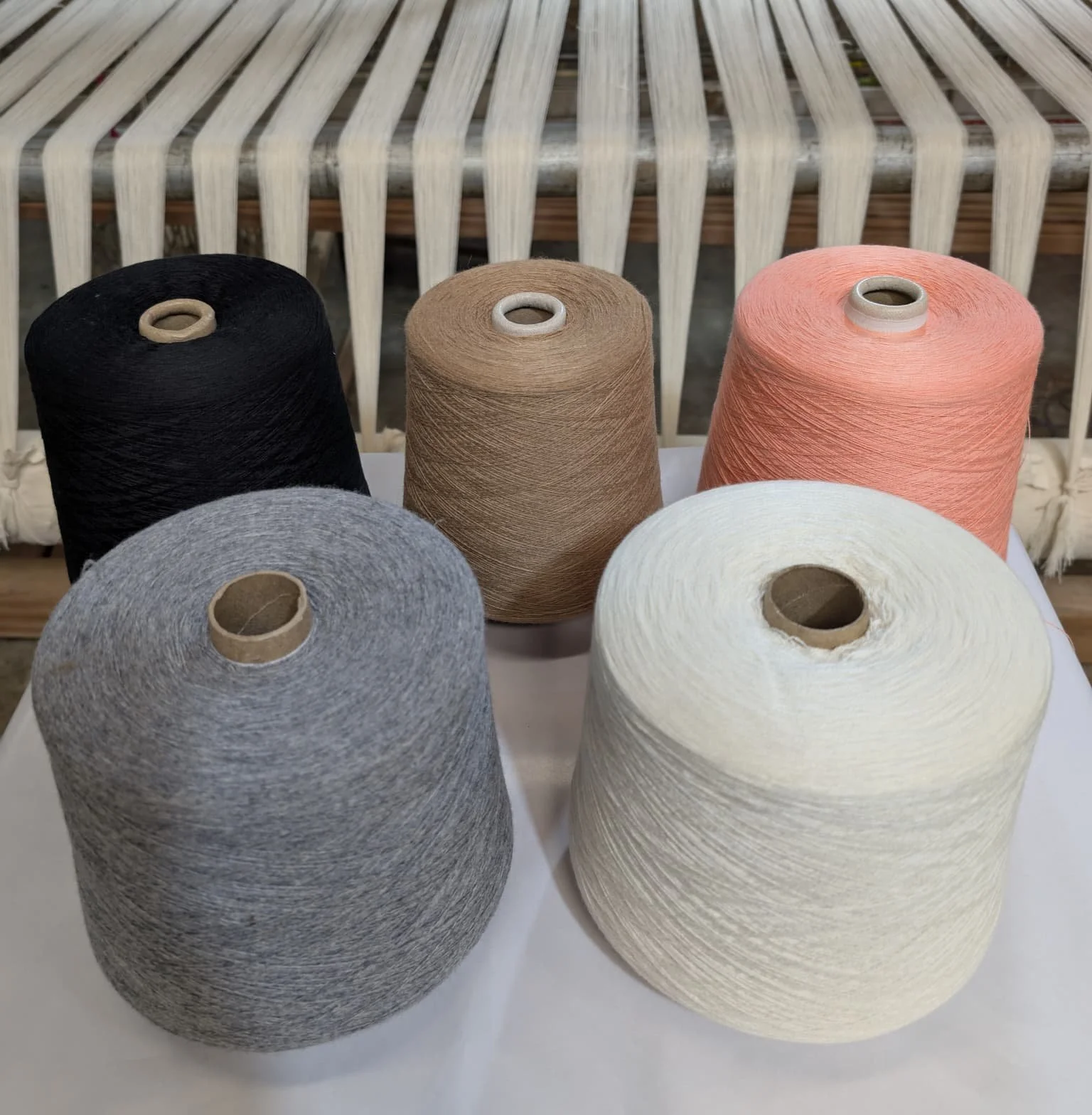
When people think about luxury cashmere, they often picture the finished product, a beautifully woven throw draped over a sofa or a blanket adding warmth to a carefully designed bedroom.
What many don't see is that the quality of the finished textile is largely determined long before weaving ever begins.
It starts with the yarn.
One of the most important lessons we've learned over the years is that not all cashmere yarn is the same. Two yarns can both be labeled 100% cashmere, yet produce noticeably different results in softness, appearance, durability, and long-term performance.
Understanding why begins with understanding the fiber itself.
What Makes One Cashmere Yarn Different from Another?
Cashmere comes from the soft undercoat of cashmere goats, but not every fiber harvested has identical characteristics.
Several factors influence the quality of the yarn that is eventually spun, including:
Fiber diameter
Fiber length
Fiber uniformity
The quality of sorting and dehairing
The spinning process
Each of these elements affects how the finished yarn behaves during weaving and, ultimately, how the completed textile performs in everyday use.
For a manufacturer, selecting yarn is about far more than choosing a color or composition. It's about understanding how those characteristics will influence the final product.
Softness Is Only the Beginning
When people evaluate cashmere, softness is usually the first thing they notice.
And understandably so.
Exceptional cashmere has an unmistakably smooth, luxurious hand feel that immediately sets it apart.
But softness alone doesn't tell the whole story.
A high-quality yarn should also create a textile that maintains its beauty over time. The way a throw drapes, how well it holds its shape, and how gracefully it ages are just as important as the initial impression.
When evaluating yarn, we're always asking broader questions.
Will this create the weight and character the project requires?
Will the textile retain its appearance through regular use?
Will it continue to feel luxurious years from now?
These considerations are just as important as softness itself.
The Relationship Between Fiber Quality and Performance
The quality of the underlying fiber has a direct influence on how a textile performs.
Carefully selected fibers can contribute to:
A smoother, more refined surface
Better structural consistency
Improved drape
Greater long-term durability
Reduced tendency toward excessive pilling
No natural fiber is completely immune to pilling. Cashmere, like wool and many other luxury fibers, will naturally develop some pilling over time, particularly during its early use. This is a normal characteristic of the material rather than a flaw.
However, the quality of the fiber and the yarn can influence how the textile ages and how well it maintains its appearance with proper care.
Why Yarn Selection Matters Before Weaving Begins
By the time yarn reaches our workshop, many of the most important quality decisions have already been made.
The weaving process can enhance the beauty of exceptional yarn, but it cannot transform poor-quality raw materials into a luxury textile.
That's why yarn selection is one of the most important stages of our manufacturing process.
Before we begin weaving, we carefully consider whether the yarn is appropriate for the intended application, whether that's a lightweight decorative throw, a substantial blanket, or a bespoke hospitality project.
The goal is always the same: to create a textile that not only looks beautiful on the day it arrives, but continues to perform beautifully for years to come.
Quality Begins Before the Loom
When people think about craftsmanship, they often imagine the artisan working at the loom.
That craftsmanship is certainly essential.
But every exceptional textile is also the result of countless decisions made before weaving ever starts.
Selecting the right yarn is one of the earliest and most important of those decisions.
At Arihant Collection, we believe that true quality isn't created by a single step in the process. It's built layer by layer, beginning with the careful selection of the materials themselves and continuing through weaving, finishing, and quality control.
Because the finest handwoven cashmere doesn't begin on the loom.
It begins with choosing the right yarn.
