
Behind Every Custom Textile: Why Planning Matters Before Production Begins
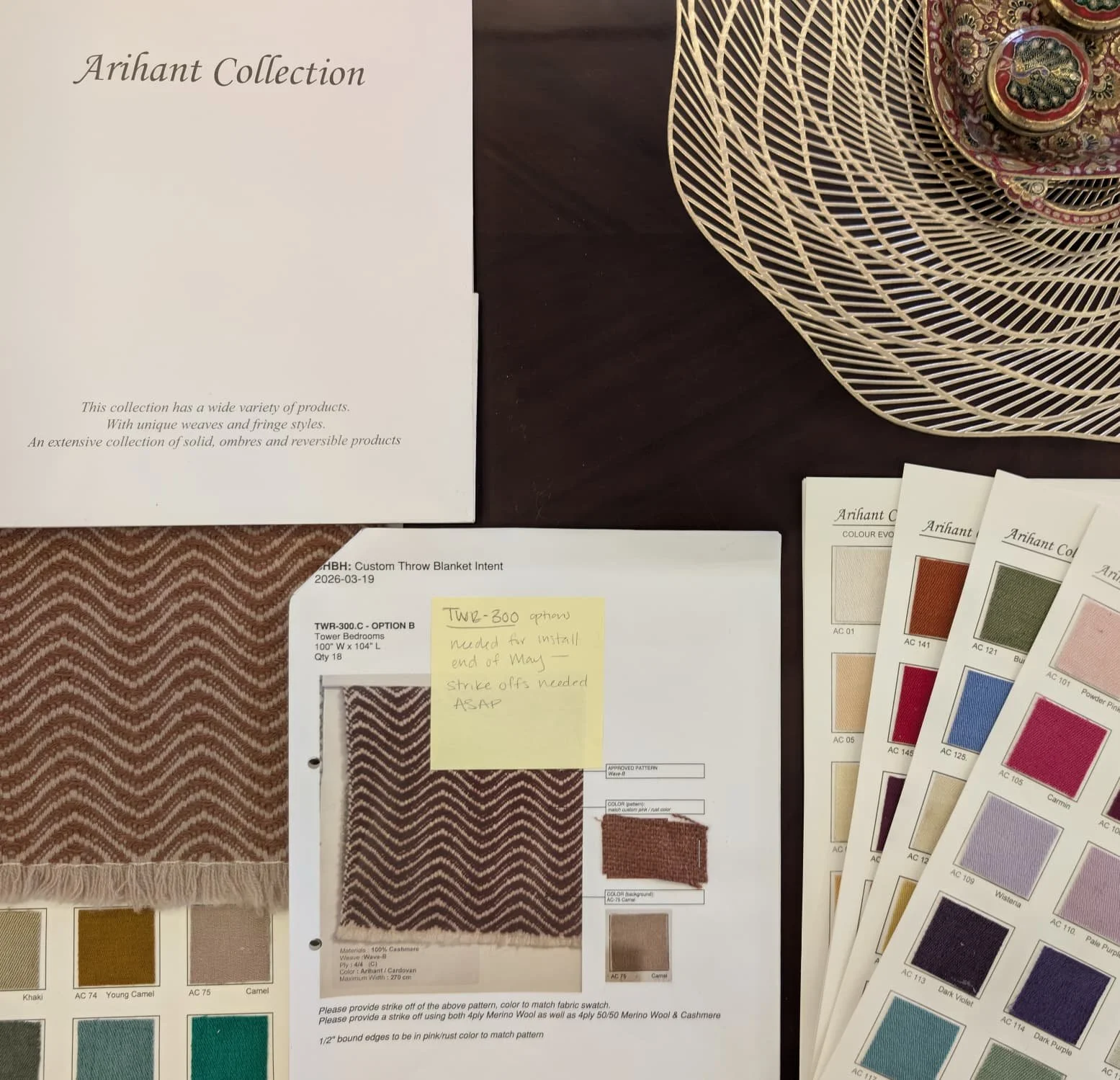
One of the biggest misconceptions about custom manufacturing is that the most important work happens during production.
In reality, much of the success of a custom textile project is determined long before the first yarn is placed on the loom.
Over the years, we've noticed that interior designers rarely worry about the design itself. They already have a clear vision of the space they're creating.
What they want to know is something different.
Will the final product look the way they imagined?
Will the color match the approved palette?
Will the weave create the same texture they saw in the sample?
Will the finished pieces arrive exactly as specified?
These are important questions, and they deserve careful answers.
At Arihant Collection, we've found that the best way to answer them is through preparation.
Why Planning Comes First
Custom manufacturing involves far more than producing a beautiful textile.
Every project contains dozens of decisions that influence the final result. When those decisions are made thoughtfully at the beginning, production becomes significantly smoother for everyone involved.
Rather than treating planning as a preliminary step, we consider it one of the most valuable parts of the entire process.
The more clearly expectations are defined before production begins, the fewer surprises there are later.
Building a Detailed Specification
Every custom project begins with a detailed specification.
This document serves as the foundation for everything that follows and ensures that everyone involved is working toward the same objective.
Depending on the project, the specification may include details such as:
Finished dimensions
Color references or custom color requirements
Ply construction
Weave structure
Edge finishing
Labels or branding requirements
Packaging preferences
Production quantities
While each decision may appear relatively small on its own, together they define the finished product.
Taking the time to establish these details early creates clarity throughout the manufacturing process.
From Specification to Sample
Once the project requirements have been agreed upon, development moves into sampling.
This stage transforms technical specifications into a physical product that can be reviewed and evaluated.
Sampling allows designers and clients to confirm that the color, weave, construction, dimensions, and finishing all align with their original vision before full production begins.
It also provides an opportunity to make refinements where necessary.
Small adjustments at the sampling stage are far easier than changes after production has begun.
Confidence Through Approvals
Approvals are often viewed as a checkpoint.
We see them as a shared understanding.
Once a sample has been reviewed and approved, everyone involved has the same reference point moving forward.
Designers know what to expect.
Our production team knows exactly what has been approved.
This shared clarity reduces uncertainty and helps maintain consistency throughout manufacturing.
Production Becomes the Execution
One of the interesting aspects of custom manufacturing is that by the time weaving actually begins, many of the most important decisions have already been made.
Production is no longer a series of questions.
It becomes the careful execution of an agreed-upon plan.
This structured approach allows our artisans to focus on craftsmanship while quality control ensures that each finished piece reflects the approved specifications.
Why Process Builds Trust
Successful custom projects are rarely those without challenges.
Unexpected questions, refinements, and adjustments are a natural part of developing bespoke products.
What distinguishes successful projects is not the absence of complexity, but the presence of a clear process for managing it.
When expectations are established early, communication becomes easier, decisions become more straightforward, and everyone involved can move forward with confidence.
A Shared Vision From the Start
Custom manufacturing is ultimately a collaborative process.
Designers bring the creative vision.
Manufacturers translate that vision into a physical product.
The strongest partnerships are built on communication, careful planning, and a shared understanding of what success looks like before production begins.
At Arihant Collection, we believe that every successful textile begins long before it reaches the loom.
Because when the planning is done well, the craftsmanship has the foundation it needs to deliver exactly what was envisioned.
