
Handcrafted Doesn't Mean Unstructured: The Process Behind Handwoven Cashmere
In the luxury textile industry, few words appear more frequently than "handcrafted."
It's featured on websites, product tags, marketing materials, and social media posts across nearly every category of luxury goods. Yet despite its widespread use, the term often lacks explanation. What does handcrafted actually mean? More importantly, how does it translate into consistency, quality, and reliability for designers, retailers, and hospitality projects?
At Arihant Collection, handcrafted has never been a marketing concept. It is simply how we have worked since 1999.
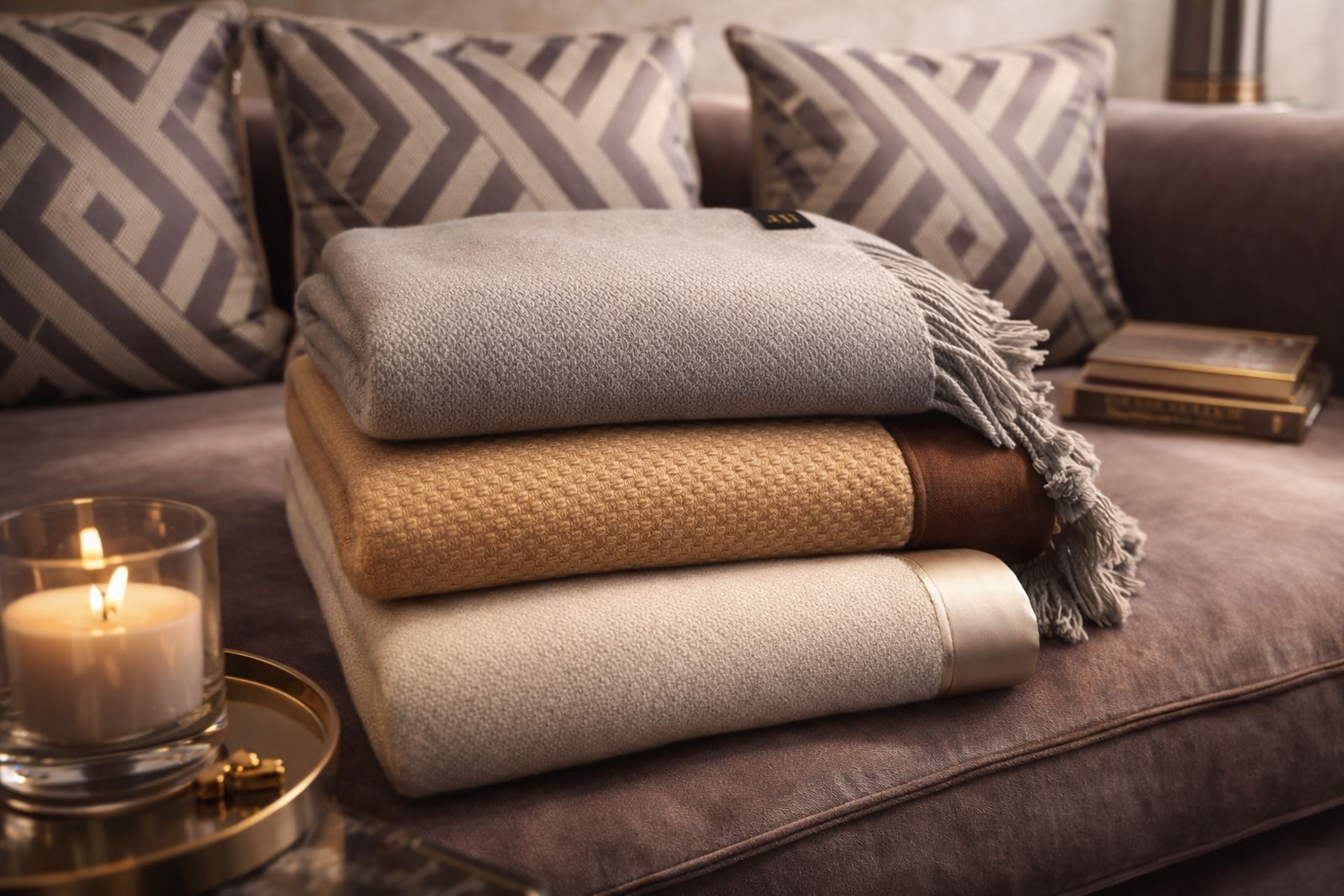
From our workshop in Kathmandu, we produce handwoven cashmere home textiles for clients around the world. Our collections include throws, blankets, bed runners, coverlets, and cushion covers, each created through a process that combines traditional craftsmanship with structured production methods.
Over the years, one misconception has appeared repeatedly: that handcrafted production is somehow less organized than industrial manufacturing.
In reality, successful handcrafted production depends on process just as much as skill.
Craftsmanship Begins with the Material
Every project starts long before a loom is prepared.
The foundation of any cashmere product is the yarn itself. Fiber selection influences not only softness, but also durability, drape, warmth, and overall performance. Depending on the intended application, different yarn counts and ply constructions may be selected to achieve the desired balance of weight and texture.
For an interior designer specifying a lightweight decorative throw, the requirements may be entirely different from those of a hospitality project seeking a more substantial blanket designed for regular use.
The decisions made at this stage shape everything that follows.
Color Development as Part of the Design Process
Color is often one of the most important elements of a custom textile project.
In luxury interiors, textiles rarely exist in isolation. They are expected to work harmoniously alongside upholstery, wall coverings, flooring, lighting, and architectural finishes. A subtle variation in tone can significantly alter the overall feel of a space.
For this reason, color development is a collaborative process. Whether working from a designer's reference, a physical sample, or a standardized color system, careful attention is given to achieving the intended result before production begins.
The objective is not simply to create a beautiful color, but to create the right color for the project.
Choosing the Appropriate Weave Structure
The weave itself contributes to both the appearance and performance of a textile.
Different weave structures influence texture, weight distribution, drape, and visual character. A design that feels appropriate in a contemporary residential setting may require a different approach than a textile intended for a boutique hotel or luxury retail environment.
Selecting the right weave structure ensures that the finished product supports both the aesthetic and functional goals of the project.
Sampling Before Production
Custom development requires verification.
Before full production begins, samples provide an opportunity to review materials, color, construction, and overall appearance. This stage allows adjustments to be made early in the process, reducing uncertainty and ensuring alignment between the original design intent and the final product.
Sampling is often one of the most valuable stages in custom textile development because it transforms concepts into something tangible that can be evaluated and refined.
Quality Control Throughout the Process
Handwoven production does not end when weaving is complete.
Each piece passes through finishing and inspection stages before leaving the workshop. Attention is given to dimensions, construction, finishing details, and overall consistency.
While the weaving itself reflects the skill of individual artisans, quality control ensures that every piece meets the standards expected by designers, retailers, and project teams.
The Balance Between Tradition and Structure
When people hear the word handcrafted, they often imagine a purely artisanal process guided entirely by instinct.
The reality is different.
The craftsmanship happens on the loom. The consistency comes from the systems behind it.
Successful custom manufacturing requires both. Traditional weaving techniques provide the character and authenticity that make handwoven textiles unique, while structured processes provide the reliability necessary for professional design and hospitality projects.
At Arihant Collection, we believe these two elements are not opposites. They work together.
For more than two decades, that balance between craftsmanship and process has guided how we develop handwoven cashmere textiles for clients around the world.
In future articles, we'll explore the details behind custom color development, weave construction, cashmere specifications, and the collaborative process of working with interior designers, luxury retailers, and hospitality projects.
