
What Sustainability Means to Us: Making Fewer, Better Textiles
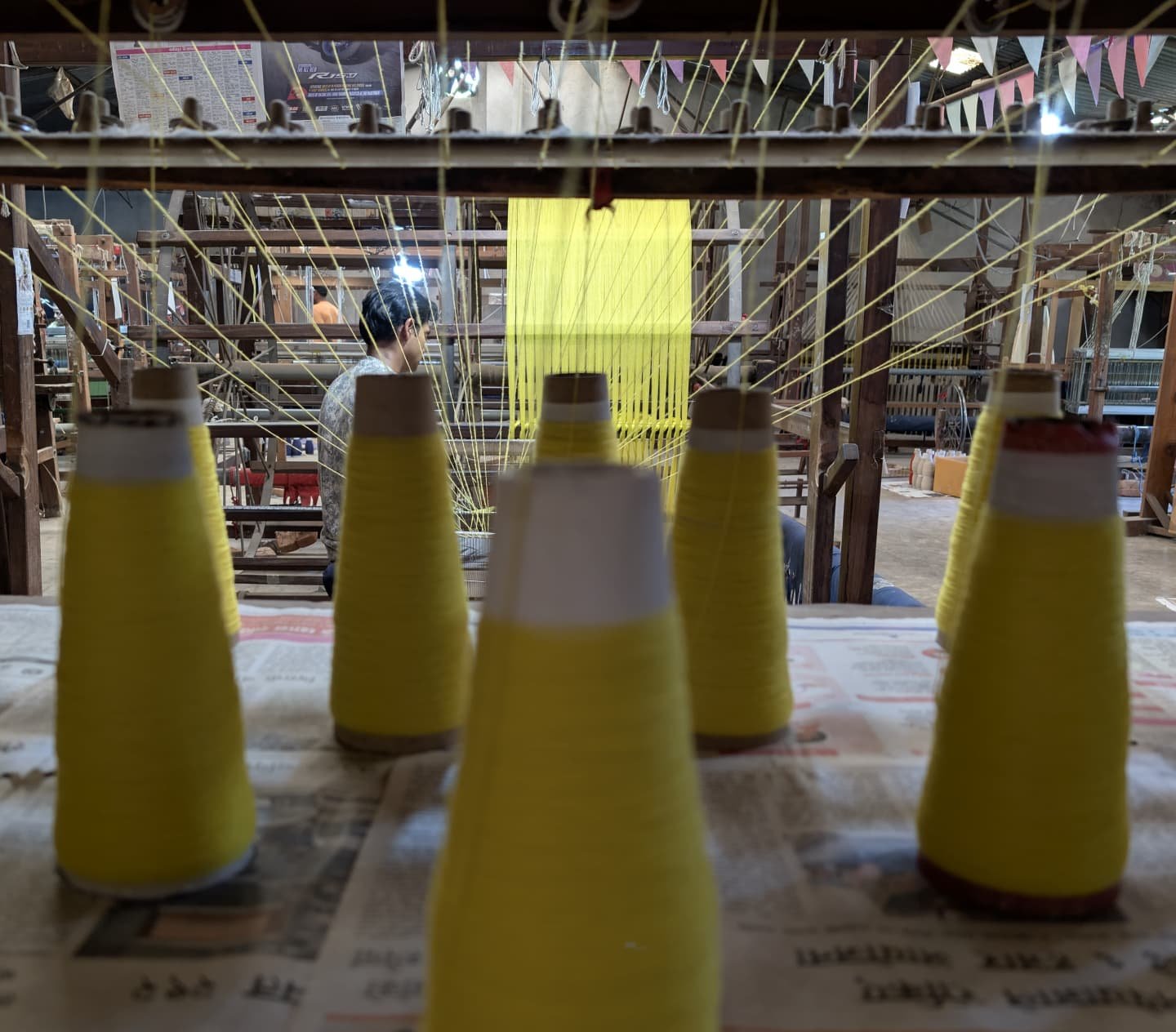
Sustainability is one of those words you hear everywhere in manufacturing today.
But what does it actually mean?
The answer can become complicated very quickly. There are certifications, materials, production methods, energy consumption, packaging, transportation, waste, and countless other factors to consider.
For us, sustainability starts with something much simpler:
Making products that last.
Designing for Longevity
A handwoven cashmere throw is not something we expect a customer to replace every few years.
When made well and properly cared for, a quality cashmere textile can remain part of a home for decades.
That changes the way we think about manufacturing.
Instead of focusing only on how efficiently we can produce a product today, we also consider how that product will look and perform years from now.
The most sustainable product is often the one that doesn't need to be replaced.
Making to Order
The way a product is manufactured matters just as much as the materials used to make it.
At Arihant Collection, much of our production is made in small batches and largely to order.
This is particularly important for custom projects. Rather than producing large quantities of finished textiles and hoping they eventually find a home, we manufacture according to specific project requirements.
A designer may require a particular size, color, weave, or quantity.
We make those pieces for that project.
This approach helps us avoid unnecessary inventory and reduces the likelihood of producing textiles that may never be used.
It also allows us to spend more attention on each individual project.
Natural Fibers and Responsible Materials
Material selection is another important part of the equation.
We primarily work with natural fibers such as cashmere, merino, yak, camel, and other natural textile materials depending on the requirements of a project.
For our cashmere production, we also work with OEKO-TEX certified yarns and AZO-free dyes where applicable.
These choices are not presented as a single solution to sustainability. Responsible manufacturing is more complicated than one material, certification, or process.
But we believe that each considered decision contributes to a better overall approach.
Small Decisions Add Up
Sustainability doesn't always look particularly exciting from the workshop floor.
Sometimes it means making only what is needed.
Sometimes it means selecting a material carefully.
Sometimes it means developing a product that can be used for many years rather than designing around short-term trends.
And sometimes it means spending more time on a process because doing it properly creates a better and longer-lasting result.
None of these decisions are particularly flashy.
They simply become part of how a business operates.
A Different Approach to Luxury
Luxury has traditionally been associated with abundance.
But we think there is another way to look at it.
A truly considered luxury product doesn't need to be disposable or constantly replaced. It can be something that becomes more meaningful through years of use.
A blanket that remains in a family home for twenty years has a very different relationship with its owner than something designed to be replaced after a season.
Its value isn't only in the material.
It's in its longevity.
Sustainability as a Starting Point
We don't think sustainability should be something added to a product's story after it has already been made.
It should influence decisions from the beginning.
How is the product designed?
What materials are selected?
How much needs to be produced?
How will it be used?
How long is it expected to last?
These questions are relevant whether we're producing a single custom throw or developing textiles for a larger hospitality project.
For us, responsible manufacturing isn't about making grand claims.
It's about making better decisions, consistently.
And ultimately, that means making fewer, better products that are designed to be used and enjoyed for a long time.
